MarineShift360 Impact Accelerator Targets Full Marine Lifecycle with 2026 Cohort
Marine Futures
Gurit, MobyFly and NLComp chosen to advance lifecycle assessment across composite materials, zero-emission propulsion and end-of-life solutions
Marine Futures has announced Gurit, MobyFly and NLComp as the three companies selected for the 2026 MarineShift360 Impact Accelerator Programme.
Chosen from 20 applicants spanning 10 countries, the cohort represents the full lifecycle of marine sustainability, from the advanced materials that build vessels, to the propulsion systems that power them, to the end-of-life solutions that ensure they don’t become tomorrow’s waste.
Led by Marine Futures and supported by 11th Hour Racing, the Impact Accelerator is a year-long initiative equipping marine organisations with lifecycle assessment expertise, technical consultancy and access to an industry-wide sustainability network.
Results from the inaugural 2025 cohort have already reshaped how leading marine organisations design, procure and invest.
RNLI, the charity that saves lives at sea, identified the use phase as the dominant emissions driver for its Atlantic 85 lifeboat, overturning assumptions that production was the primary hotspot. Wind propulsion pioneer BAR Technologies confirmed that its WindWings® system achieves carbon payback within months. Both organisations are now applying the findings to future design and product strategy.
Now entering its second year, the programme is scaling its ambition and extending that impact across the full vessel lifecycle.
NLComp was founded by competitive sailors who saw abandoned composite boats deteriorating in harbours with nowhere to go but landfill. The Italian company has since developed rComposite®, a DNV-certified, fully recyclable thermoplastic composite system using recycled carbon fibre and natural fibres. As part of the Impact Accelerator, NLComp will build a lifecycle assessment framework to benchmark its composites against traditional thermoset materials, quantifying differences across global warming potential, landfill waste and material reuse.
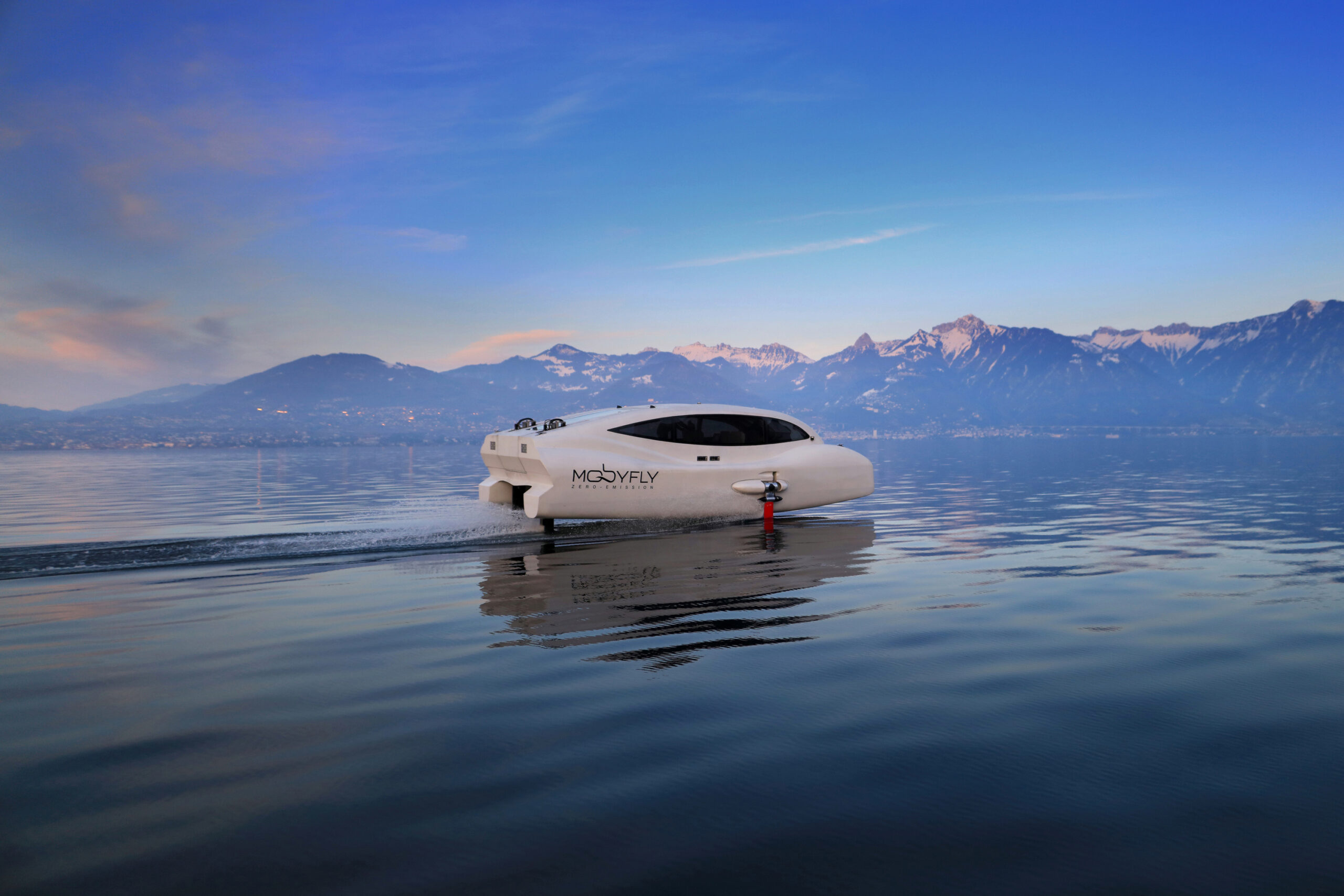
MobyFly, a Swiss-Portuguese technology company recognised as a World Economic Forum Technology Pioneer, is developing zero-emission hydrofoil vessels for passenger transport. Its retractable foil system lifts the hull from the water at speed, cutting energy use by up to 80% compared to conventional diesel ferries. MobyFly will use the year-long partnership to produce a cradle-to-grave lifecycle assessment of its 12-passenger S1 vessel, establishing a credible environmental baseline for the high-speed electric vessel category.
Gurit is one of the world’s leading composite materials and engineering companies, serving marine, wind energy and aerospace industries from operations spanning four continents. Through the programme, Gurit will assess the lifecycle impact of key marine products, identify lower-impact material and design pathways, and embed LCA methodology into day-to-day engineering, with the long-term ambition of making environmental impact data a standard part of every client deliverable.
Ollie Taylor, Director of Marine Futures, said: “Building on the momentum of last year’s programme, the 2026 cohort is taking a full ecosystem approach to decarbonising the marine industry. From the materials that shape production, to the performance and energy profile of next-generation vessels, through to the circularity of composite structures at end of life — this year’s intake is connecting the entire lifecycle. It’s a joined-up effort to bring transparency and data-driven decision-making to the points that matter most: what we build with, how we power it, and what happens when it reaches the end of its first life.”
Jeremy Pochman, Co-founder and CEO of 11th Hour Racing, said: “What the marine sector increasingly needs is credible data to guide the transition ahead. The organisations in this year’s cohort are taking an important step by committing to transparent, science-aligned lifecycle assessment of their products and processes.”
“The insights generated through the Impact Accelerator will inform smarter design choices, investment decisions and innovation pathways across the wider marine industry. This is how meaningful, system-level change begins to take hold.”
To learn more about the Impact Accelerator Programme, visit marineshift360.org.
Header image credit: MobyFly